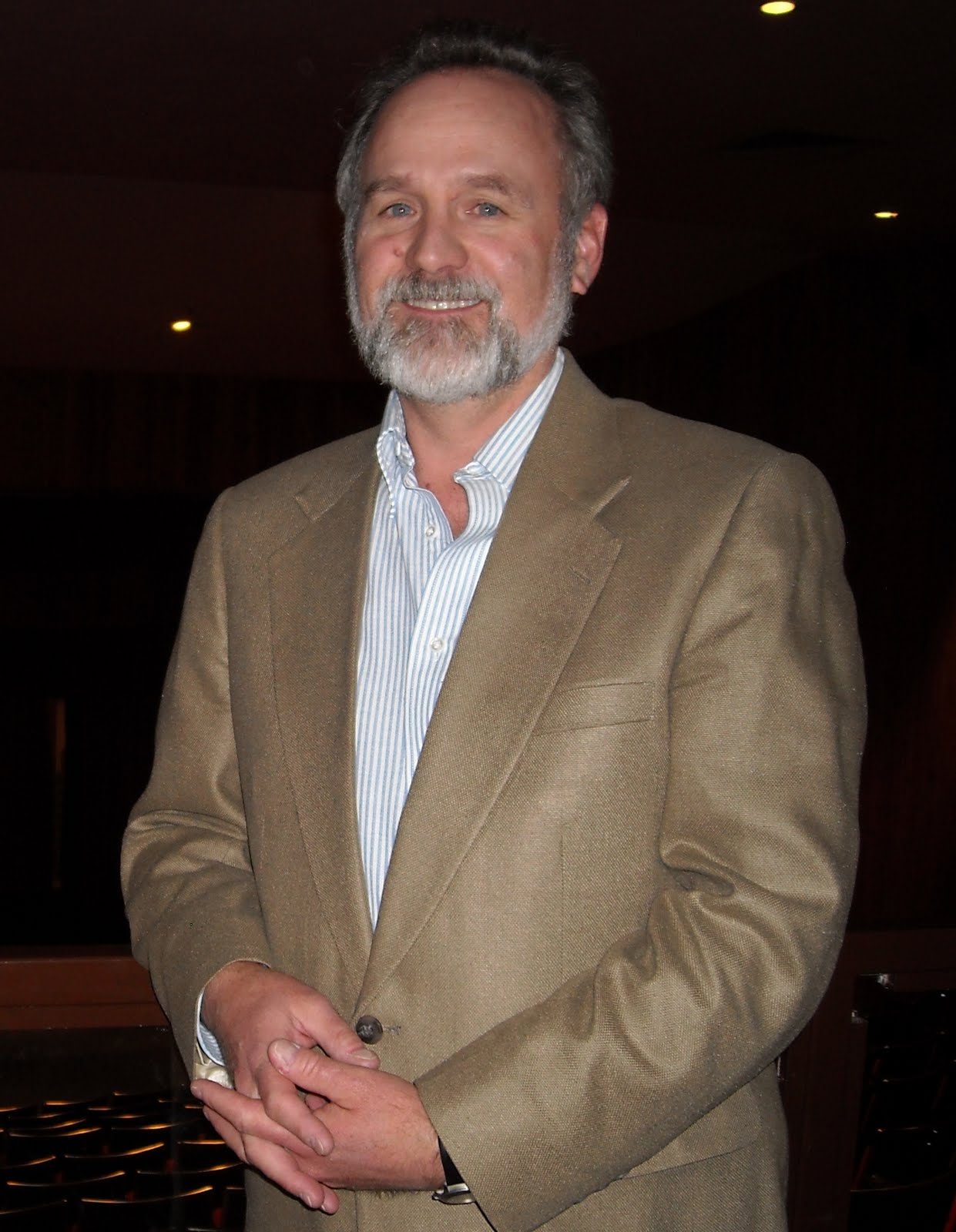
By Les Owen, New Mexico Section
The New Mexico Section of the Society for Range Management held its Summer Tour on July 22, 2011 at the NMSU Corona Range and Livestock Research Center. Ranch Superintendent, Shad Cox, started the day off with an overview of operations on the 42 section ranch located in central New Mexico. The CRLRC is a unique research facility in that research and ranch operations are funded by commercial livestock production (cattle and sheep) and hunting opportunities on the ranch. A large collection of research literature is available on the CRLRC website.
The first stop was in a pasture where juniper was mechanically controlled in the late 1970s. Dr. Andrés Cibils is leading a research project using very large scale aerial photography and specialized software to analyze re-invading juniper sapling density effects on grass production. Preliminary data indicate that when sapling size reaches 1 meter cover, grass production decreases significantly.
Stop 2 was in a pasture where roughly half was open grassland and half juniper woodland. GPS collars were fitted on cattle and mule deer to determine habitat preference for each species based on tree densities, time of year, and climatic conditions. Data show that both mule deer and cattle start to avoid woodland areas when canopy cover exceeds 40%.
The third site was an area where an intensive targeted grazing study was conducted using goats and sheep to control juniper saplings. Results only indicated a 5% kill on saplings, with most controlled individuals being smaller in size. The majority of the saplings were too large and established for the targeted grazing to be highly effective. Targeted grazing can be an effective tool for managing juniper saplings that are small and could be a good complementary tool with other control mechanisms.
Just before lunch we visited a half section pasture where re-invading juniper was controlled using individual plant treatments of Velpar. Around 95% control was achieved for close to $9.50 per acre application cost. The CRLRC employed the services of the NMSU Range Club to apply the treatment which resulted in good experience for the students and an effective control for the CRLRC. Tour Sponsor and DuPont Representative, Jack Lyons, provided information about placement of soil application of Velpar in relation to the edge of the juniper drip line.
Lunch was served at the almost completed Southwest Center for Rangeland Sustainability located near the center of the ranch. Shad Cox provided a tour of the new facility which will serve as a centrally located venue in New Mexico for educational programs related to agriculture. The facility houses a classroom, conference room, offices, and a commercial kitchen. Look forward to hearing of many more great programs being hosted at this facility.
After lunch we moved on to a site where individual juniper plants in plots received either a foliar application of Surmount or tree drip line application of Tordon. Tour Sponsor and Dow Representative, Greg Alpers, provided information about the applications and emerging technology using electrostatically charged herbicide to vastly improve efficacy of aerial treatments. Trials have been conducted on mesquite and cholla with promising results.
Next a research project using VLSA photography to estimate juniper biomass for use as a biofuel was visited. After the photography was acquired, each juniper was individually harvested, mulched and weighed to calibrate the estimation tool. This was done on two separate plots where about 50 tons of biomass was harvested. Researchers are able to use data from this project to accurately estimate standing juniper biomass using VLSA photography. Note in the picture background a strange phenomenon having to do with darkening skies that has been rumored to happen in the past around New Mexico.
Our 7th stop of the day was a hydrology study in juniper woodlands where soil moisture sensors were placed in replicated plots where Spike had been used to control juniper and control plots. Data showed a 3 fold increase in grass production in treated plots, but due to the low average rainfall neither control or treated plot soil sensors indicated moisture penetration that would lead to aquifer recharge.
Our final stop of the day was to a study where Spike was used to control juniper in the mid 1990s and Rx fire was used as a follow up treatment in 2003 to control emerging saplings. Differences in forage production between the pasture where the Spike treatment was followed with Rx fire and that without fire was significant. Sapling emergence in the non-burned pasture caused a decrease in grass production.
The NMSRM Summer Tour had a great tour and we are very appreciative to NMSU and the Corona Range and Livestock Research Center for hosting the event. We also would like to thank our tour sponsors: Dow, DuPont, and NorthStar Helicopters.
Showing posts with label Educational Institutions. Show all posts
Wednesday, July 27, 2011
Wednesday, July 13, 2011
Announcing the Launch of the Collaborative Conservation Learning Network
The Center for Collaborative Conservation at Colorado State University has just announced the launch of their web-based Collaborative Conservation Learning Network (CCLN). The purpose of the CCLN is to facilitate the exchange of ideas, innovations, tools and study results, and to foster connections among academics, practitioners and others, to help worldwide collaborative conservation efforts become effective and sustainable.
The CCLN includes a multi-media library for resources related to collaborative conservation, opportunity listings (including jobs, funding, trainings, conferences and workshops), collaborative conservation organizations and initiatives, discussion boards, a members’ directory with direct messaging, links to resources related to policy and law, blogs and podcasts.
They will be working hard to continually add new, useful information to the CCLN, but others are invited to contribute.
You can explore/join the Learning Network here: https://www.collaborativeconservation.org/learning-network
For more information please contact Jill Lackett: Jill.Lackett@colostate.edu
Wednesday, June 29, 2011
Ethnobotany: An interesting perspective on range management, at a bombing range.
By: J. Johansen, SRM Student Member
Ethnobotany: the study of how a culture uses plants. But, who cares about plants anyway? Let alone knows their names, their relationships to each other and other living things? Aren’t all those cultures dead? I find it interesting that the American sub-culture of the range manager may be one of the few who still speak the language of plants.
On this year’s Pacific Northwest Summer Tour we got a real treat, a trip through the Yakima Training Center, the US Army’s live-fire training grounds. Our gracious host shared with us his job of keeping the soil on the ground, in spite of tanks, artillery, and fires. He guided us through test plots of grasses and shrubs planted in the late 90’s, describing how each had faired over time, and how well they stood up to the abuse of army vehicles driving over them. The test plots were really interesting, in that it could be seen what plants had failed completely, what plants wandered out of their row, what plants grew larger at the edge of their plot to try and outcompete it’s neighbor, and just the chance to work on identification. The YTC’s Botanist consultant set me strait that the “two” grasses I had were in fact the same, one just had a fungal infection (don’t worry, cheatgrass!). Also, in another area towards the end of our YTC tour, we looked at a test plot from 1961.
In this area we looked at the after effects of a wildfire and sage seedlings that had been planted last fall. The grasses and massive amounts of lupines in this photo and all throughout the burn area had come back on there own, without seeding. The sage seedlings were planted because a large portion of the burn was within a Sage Grouse protection area (yes, on a bombing range) and they wanted the sagebrush to return.
We also visited sites outside the YTC grazed by the Martinez family’s bands of sheep. One of the Principals of the largest sheep operation in the state of Washington, Mark Martinez was generous to take time out of his day, show us several sites and discus the ins and outs of running seven bands of about 7,500 sheep total.
*** J. Johansen will be attending OSU’s Range program at Eastern Oregon University for his junior year this fall, is working as a NRCS student intern, and has no credibility whatsoever. You can take a peek at what he does in his spare time at http://www.rideherd.com.
Ethnobotany: the study of how a culture uses plants. But, who cares about plants anyway? Let alone knows their names, their relationships to each other and other living things? Aren’t all those cultures dead? I find it interesting that the American sub-culture of the range manager may be one of the few who still speak the language of plants.
| Range Manager, or Plant Magician? |
| SRMer's speak the language of plants |
| Land destroyed by wildfire! |
In this area we looked at the after effects of a wildfire and sage seedlings that had been planted last fall. The grasses and massive amounts of lupines in this photo and all throughout the burn area had come back on there own, without seeding. The sage seedlings were planted because a large portion of the burn was within a Sage Grouse protection area (yes, on a bombing range) and they wanted the sagebrush to return.
| Intact sagebrush system with previously burned hill behind |
We also visited sites outside the YTC grazed by the Martinez family’s bands of sheep. One of the Principals of the largest sheep operation in the state of Washington, Mark Martinez was generous to take time out of his day, show us several sites and discus the ins and outs of running seven bands of about 7,500 sheep total.
*** J. Johansen will be attending OSU’s Range program at Eastern Oregon University for his junior year this fall, is working as a NRCS student intern, and has no credibility whatsoever. You can take a peek at what he does in his spare time at http://www.rideherd.com.
Friday, June 3, 2011
SRM Welcomes Maggie Haseman, SRM Summer Outreach Intern
![]() |
| Maggie Haseman, tired after a long hike to our campsite on a father-daughter backpacking trip to Crater Lake in July 2010 |
I have lived in colorful Colorado all my life and am currently living in Fort Collins, CO. I enjoy many activities such as hiking in the beautiful Rocky Mountains and playing the ukulele. I also play tennis, when I get the chance, and spend time playing cards or board games, and chatting with my friends and family.
I am a first-year SRM member and heartily enjoyed attending the SRM Annual Meeting in Billings last February, where I competed in the plant ID competition. I am very happy to have the chance to get more involved in the society through this summer Internship Program. You will hear from me often on the SRM Outreach Blog, Facebook page and LinkedIn group until August when I must go back to school.
As the Outreach Intern I have been working on various projects for SRM including helping with the details for the 2012 Annual Meeting in Spokane, Washington, and organizing a meeting contact list so that the Society can be more efficient and organized about contacting parites for news and events related to the Annual Meeting. I plan on using my experience at SRM and my interests in both rangelands and ethnobotany to write a series of blog posts on the history of the American Great Plains. I would like to look into the ways that humans have shaped the ranges and also how the ranges have shaped us.
Monday, April 25, 2011
No College Students Were Harmed in the Making of this Post
...though you're not alone if this image makes you nervous:
Saturday, April 16, marked the first annual SRM Office Beautification Day. Landscaping at the SRM headquarters office in Wheat Ridge, Colorado has fallen into disrepair in recent years. The paint on the SRM sign was peeling, bushes around the buildings were dead and dying, stepping stones were sunken and crooked, and the "garden" beds were in desperate need of a good mulching.
So, on a beautiful, 70 degree Saturday last week, the Colorado State University and University of Wyoming Range Clubs convened at the SRM office to prune, plant, paint, mulch, and beautify. In exchange, SRM sponsored a donation to each club, a pizza lunch, and apple turnovers from Executive Vice President Jess Peterson's favorite nearby shop. Not only did students contribute to the overall beauty of the SRM office, but also had the opportunity to network between clubs and chat over the phone with SRM President, Jack Alexander.
All shrubs, grasses and forbs that went in to the new landscaping were native to Colorado. SRM would like to extend a huge 'thank you' to Kristin Oles and the CSU Range Club for donating many of the plants.
The new garden beds now include the following:

On behalf of the Society for Range Management we would like to thank the CSU and UW range clubs and all 15 students that spent their Saturday helping out at their professional society: Maggie Haseman, Kristin Oles, Baili Foster, Bailey Terry, Kelly Wotkyns, John Wagner, Mandy O'Donnell, Colleen Buck, Sydney Burek, Sarah Griffith, Emily Wotkyns, Haley Lockwood, and Ryder Simeniuk. And a special thank you to club members Robert Emanuel (CSU) and Katie Schade (UW) for helping to coordinate this event!
| The "before" photo - note the sad face |
Saturday, April 16, marked the first annual SRM Office Beautification Day. Landscaping at the SRM headquarters office in Wheat Ridge, Colorado has fallen into disrepair in recent years. The paint on the SRM sign was peeling, bushes around the buildings were dead and dying, stepping stones were sunken and crooked, and the "garden" beds were in desperate need of a good mulching.
| Getting started... |
| Does anyone else find this a bit precarious? |
| EVP Jess Peterson never thought he would need to purchase sagebrush |
- big sagebrush (Artemisia tridentata)
- bluebunch wheatgrass (Pseudoroegneria spicata)
- columbine (Aquilegia L.)
- mountain pepperweed (Lepidium montanum)
- strawberry/scarlet hedgehog cactus (Echinocereus coccineus)
- golden tickseed (Coreopsis tinctoria)
- lupine (Lupinus argenteus)
- blackeyed susan (Rudbeckia hirta)
- primrose (Oenothera pallida)
- aspen fleabane (Erigeron speciosus)
- purple prairie clover (Dalea purpurea)
- mule-ears (Wyethia amplexicaulis)
- prairie junegrass (Koeleria macrantha)
- broom snakeweed (Gutierrezia sarothrae)
- tanseyleaf tansyaster (Machaeranthera tanacetifolia)
- shrubby cinquefoil (Potentilla fruticosa)
- and some Bromus tectorum (just joking!!)
On behalf of the Society for Range Management we would like to thank the CSU and UW range clubs and all 15 students that spent their Saturday helping out at their professional society: Maggie Haseman, Kristin Oles, Baili Foster, Bailey Terry, Kelly Wotkyns, John Wagner, Mandy O'Donnell, Colleen Buck, Sydney Burek, Sarah Griffith, Emily Wotkyns, Haley Lockwood, and Ryder Simeniuk. And a special thank you to club members Robert Emanuel (CSU) and Katie Schade (UW) for helping to coordinate this event!
| Check out the sweet shirts AND smiling faces! |
Tuesday, January 11, 2011
SRM Spotlight Synopsis: Final Report by SRM Outreach Intern, Julia Workman
Serving as Society for Range Management’s first Outreach Intern this semester has been an amazing learning experience. My first goal for the Internship was to glean personal insight from SRM members and make this information available through posts on the SRM blog. My duties taught me to present information in a manner that would appeal to a wide audience, with varied backgrounds but a common interest. Along with this, I had the opportunity to travel to Grand Junction for the Colorado Section fall meeting, and to share what I have learned in the interviewing process. My second goal was to establish relationships and gain experience interacting with the diverse group of professionals involved in SRM. This was achieved through communication with the members I interviewed and various other members with whom I interacted. My time at the Colorado Section meeting allowed me to meet with with experienced members on a personal level while carrying out my internship duties. The insights gained from these experiences will be valuable as I go forth and attempt to achieve my own career ambitions.
To gather the information from SRM members, I conducted ten interviews with members representing eleven different sections (Pacific Northwest, California-Pacific, Idaho, International Mountain, Wyoming, Colorado, New Mexico, Northern Great Plains, South Dakota, Texas, and Florida). Nine of these interviews were conducted by telephone, and the remaining interview in person at the Idaho Section fall meeting. Interviewees represented a broad range of professions in the field of rangeland management: two ranchers, three researchers (including one professor emeritus), three government agency-employed resource managers (two with the federal government and one with a state), one private contractor, and one botanist. Most came from rural backgrounds related to rangelands or agriculture, but each had followed a unique career path, and all had played very different roles in SRM. Despite the diversity of individuals I interviewed, there was an overall trend of similar answers and common themes throughout the interviews.
One of the first questions I asked each member was why he or she had joined SRM. Three joined in college, and seven during their professional careers. Their reasons for joining included the information offered, the professional development opportunities, employer or agency encouragement, or a combination of the three. They were then asked, based on their experiences, what SRM can do to attract and retain members. Their answer: Stay relevant! Be more engaged with the public, and more visible. Make apparent exactly what SRM is doing in rangeland management. Another suggestion was that the Society needs to attract students, then keep track of them as they move into the workforce by maintaining personal contact. Attracting individuals at the local level and through agencies is also going to play a big role—again, through personal contact. Another important aspect, which was emphasized again and again by member after member, is outreach. Rangeland management is broadening in its scope, and the spectrum of people the Society is trying to reach should broaden as a reflection of that.
One focus of my interviews was on the changes that are occurring in SRM and the workforce. The members with whom I spoke said that the main principles of SRM have remained the same, which is very important to them. But they also talked about some positive changes, like increased involvement from younger generations and the large student presence in the Society right now. It was great to hear these longtime members talking about how the younger generation is bringing new ideas and a new energy to the profession! From a logistical standpoint, interviewees felt that it is also really important that younger members be able to fill the gaps in the workforce left by retiring members, especially the members of the “Baby Boomer” generation.
Another important theme mentioned with respect to SRM’s recent changes was the way the Society is reaching out to other groups. One example cited was the producer forums which were held at the Annual Meeting in Denver last year. Two interviewees felt that SRM has distanced itself from livestock production groups in the last several years and are really pleased with the reverse in that trend. Another long-term member was pleased with the way the Society is embracing ecology. He pointed to the journal change to Rangeland Ecology and Management as evidence of that; another great example of the Society’s emphasis on ecology is the Ecological Site Description workshops with which SRM is currently involved. This means the Society is reaching out in a lot of different directions and satisfying people with very different interests. One of the most important groups to reach out to is the general public. Rangeland managers are increasingly seeing the need to be aware of society’s opinions and deal with them. As management for broader interests, like open space, becomes more prevalent, it is becoming increasingly important to embrace nontraditional areas like policy and human dimensions—because these aspects are now intrinsically intertwined with rangeland management.
Another big change in SRM is an increased emphasis on using technology, both old and new. The Internet, for example, can be a major tool in facilitating everything from communication to research. Information can be found with an ease never possible before, through resources ranging from online journals to programs like Google Earth that offer a big view and great resolution. As we manage on a broader scale, it is important to let land managers see their parcel in the context of the bigger landscape.
I also asked interviewees what SRM can do to better serve its members. One important service, they said, involves continuing to provide lines of communication between agencies, landowners, land managers, and environmental groups, while providing a safe venue for discussion between said groups.
It is also very important right now, as many members are retiring and many others joining the workforce for the first time, that knowledge be passed between generations. It is therefore going to be critical to retain members after they retire in order to retain that institutional knowledge for the sake of the profession. One of the most important places for mentoring to occur between generations is at local field days and tours, where the younger members can get their hands dirty and gain real field experience, in a one-on-one scenario. However, Annual Meeting mixers also play an important role in opening channels of communication and fostering relationships.
What these members value about SRM (what it is doing well) was another question posed in these interviews. A few mentioned the journals and continuing education, but every single interviewee emphasized the networking and personal connections they have gained through SRM, and how valuable and irreplaceable those have been.
As for where the Society is headed, half of the members interviewed said that down the road, they want SRM to still be alive. These members want to see the Society still active, relevant, and viable—“continuing to do what we do, respectably.” They would like to see SRM continue to be a voice for rangeland management and for rangelands themselves: it is unique among professional societies in that it speaks for the resource. They said SRM needs to be looking at broader issues as the profession broadens. It needs to continue to diversify its membership, while maintaining its founding ideals. These members want to see the dissimilar groups involved in rangeland management working together toward common goals, because in diversity there is strength.
The overall consensus through these interviews was that the Society is doing very well. All the people with whom I spoke were positive about where SRM is now and where it is headed—at least, in the words of one, “there’s always room for improvement, but it’s not necessarily a poor job.”
As for me, through this experience I gained a much better appreciation for some of the history of SRM and some of the changes the Society has seen in the past few years. It was fascinating to get to know members who have played huge roles in their respective sections and states, within and outside of SRM. The different perspectives these members have, the changes they have seen, and the directions we are taking, say a lot about where we stand as a Society. I find it reassuring that they were for the most part pleased with where we stand. However, it was educational to hear about some of the issues SRM has been facing. New members like me sometimes do not always hear a balanced report involving the negative aspects of a group or the difficulties it is facing.
I believe that I have personally grown in this experience by overcoming a great deal of shyness in talking to strangers over the telephone. By having to do so, on a weekly basis, I have become much more comfortable with introducing myself and conducting business in a professional but relaxed manner. Correspondingly, this development has also helped me in dealing with people face-to-face. It was more natural for me to strike up conversations with total strangers at the Colorado Section meeting, and to ask questions. This is a professional skill that many of the individuals interviewed told me will be important in my career, and I believe that this Internship has been very influential in helping me develop it.
Written communication has also been an important part of this experience. It was my primary means of interaction with others during the Internship, and this required a honing of my writing skills to develop the proper tone in correspondence via email, and in posting of blog updates. The blogging necessitated that I learn to transcribe what members said over the phone into informative and interesting posts that would not offend, mislead, or misrepresent. Representing a professional Society in such a fashion, I learned to pay close attention to the tone and message presented by each phrase and comment to avoid misrepresentation of the individuals and the organization. It was a valuable experience and allowed for a better understanding of the “politics” that such a position means.
Overall, I have had a wonderful semester and would like to thank SRM and its members for the opportunity to take part in this Internship. I believe that the Internship is a great opportunity and hope to see more involvement from both students and members as the program continues to grow.
To gather the information from SRM members, I conducted ten interviews with members representing eleven different sections (Pacific Northwest, California-Pacific, Idaho, International Mountain, Wyoming, Colorado, New Mexico, Northern Great Plains, South Dakota, Texas, and Florida). Nine of these interviews were conducted by telephone, and the remaining interview in person at the Idaho Section fall meeting. Interviewees represented a broad range of professions in the field of rangeland management: two ranchers, three researchers (including one professor emeritus), three government agency-employed resource managers (two with the federal government and one with a state), one private contractor, and one botanist. Most came from rural backgrounds related to rangelands or agriculture, but each had followed a unique career path, and all had played very different roles in SRM. Despite the diversity of individuals I interviewed, there was an overall trend of similar answers and common themes throughout the interviews.
One of the first questions I asked each member was why he or she had joined SRM. Three joined in college, and seven during their professional careers. Their reasons for joining included the information offered, the professional development opportunities, employer or agency encouragement, or a combination of the three. They were then asked, based on their experiences, what SRM can do to attract and retain members. Their answer: Stay relevant! Be more engaged with the public, and more visible. Make apparent exactly what SRM is doing in rangeland management. Another suggestion was that the Society needs to attract students, then keep track of them as they move into the workforce by maintaining personal contact. Attracting individuals at the local level and through agencies is also going to play a big role—again, through personal contact. Another important aspect, which was emphasized again and again by member after member, is outreach. Rangeland management is broadening in its scope, and the spectrum of people the Society is trying to reach should broaden as a reflection of that.
One focus of my interviews was on the changes that are occurring in SRM and the workforce. The members with whom I spoke said that the main principles of SRM have remained the same, which is very important to them. But they also talked about some positive changes, like increased involvement from younger generations and the large student presence in the Society right now. It was great to hear these longtime members talking about how the younger generation is bringing new ideas and a new energy to the profession! From a logistical standpoint, interviewees felt that it is also really important that younger members be able to fill the gaps in the workforce left by retiring members, especially the members of the “Baby Boomer” generation.
Another important theme mentioned with respect to SRM’s recent changes was the way the Society is reaching out to other groups. One example cited was the producer forums which were held at the Annual Meeting in Denver last year. Two interviewees felt that SRM has distanced itself from livestock production groups in the last several years and are really pleased with the reverse in that trend. Another long-term member was pleased with the way the Society is embracing ecology. He pointed to the journal change to Rangeland Ecology and Management as evidence of that; another great example of the Society’s emphasis on ecology is the Ecological Site Description workshops with which SRM is currently involved. This means the Society is reaching out in a lot of different directions and satisfying people with very different interests. One of the most important groups to reach out to is the general public. Rangeland managers are increasingly seeing the need to be aware of society’s opinions and deal with them. As management for broader interests, like open space, becomes more prevalent, it is becoming increasingly important to embrace nontraditional areas like policy and human dimensions—because these aspects are now intrinsically intertwined with rangeland management.
Another big change in SRM is an increased emphasis on using technology, both old and new. The Internet, for example, can be a major tool in facilitating everything from communication to research. Information can be found with an ease never possible before, through resources ranging from online journals to programs like Google Earth that offer a big view and great resolution. As we manage on a broader scale, it is important to let land managers see their parcel in the context of the bigger landscape.
I also asked interviewees what SRM can do to better serve its members. One important service, they said, involves continuing to provide lines of communication between agencies, landowners, land managers, and environmental groups, while providing a safe venue for discussion between said groups.
It is also very important right now, as many members are retiring and many others joining the workforce for the first time, that knowledge be passed between generations. It is therefore going to be critical to retain members after they retire in order to retain that institutional knowledge for the sake of the profession. One of the most important places for mentoring to occur between generations is at local field days and tours, where the younger members can get their hands dirty and gain real field experience, in a one-on-one scenario. However, Annual Meeting mixers also play an important role in opening channels of communication and fostering relationships.
What these members value about SRM (what it is doing well) was another question posed in these interviews. A few mentioned the journals and continuing education, but every single interviewee emphasized the networking and personal connections they have gained through SRM, and how valuable and irreplaceable those have been.
As for where the Society is headed, half of the members interviewed said that down the road, they want SRM to still be alive. These members want to see the Society still active, relevant, and viable—“continuing to do what we do, respectably.” They would like to see SRM continue to be a voice for rangeland management and for rangelands themselves: it is unique among professional societies in that it speaks for the resource. They said SRM needs to be looking at broader issues as the profession broadens. It needs to continue to diversify its membership, while maintaining its founding ideals. These members want to see the dissimilar groups involved in rangeland management working together toward common goals, because in diversity there is strength.
The overall consensus through these interviews was that the Society is doing very well. All the people with whom I spoke were positive about where SRM is now and where it is headed—at least, in the words of one, “there’s always room for improvement, but it’s not necessarily a poor job.”
As for me, through this experience I gained a much better appreciation for some of the history of SRM and some of the changes the Society has seen in the past few years. It was fascinating to get to know members who have played huge roles in their respective sections and states, within and outside of SRM. The different perspectives these members have, the changes they have seen, and the directions we are taking, say a lot about where we stand as a Society. I find it reassuring that they were for the most part pleased with where we stand. However, it was educational to hear about some of the issues SRM has been facing. New members like me sometimes do not always hear a balanced report involving the negative aspects of a group or the difficulties it is facing.
I believe that I have personally grown in this experience by overcoming a great deal of shyness in talking to strangers over the telephone. By having to do so, on a weekly basis, I have become much more comfortable with introducing myself and conducting business in a professional but relaxed manner. Correspondingly, this development has also helped me in dealing with people face-to-face. It was more natural for me to strike up conversations with total strangers at the Colorado Section meeting, and to ask questions. This is a professional skill that many of the individuals interviewed told me will be important in my career, and I believe that this Internship has been very influential in helping me develop it.
Written communication has also been an important part of this experience. It was my primary means of interaction with others during the Internship, and this required a honing of my writing skills to develop the proper tone in correspondence via email, and in posting of blog updates. The blogging necessitated that I learn to transcribe what members said over the phone into informative and interesting posts that would not offend, mislead, or misrepresent. Representing a professional Society in such a fashion, I learned to pay close attention to the tone and message presented by each phrase and comment to avoid misrepresentation of the individuals and the organization. It was a valuable experience and allowed for a better understanding of the “politics” that such a position means.
Overall, I have had a wonderful semester and would like to thank SRM and its members for the opportunity to take part in this Internship. I believe that the Internship is a great opportunity and hope to see more involvement from both students and members as the program continues to grow.
Thursday, January 6, 2011
SRM Spotlight: Marilyn Samuel, Florida Section
By Julia Workman, SRM Outreach Intern
Marilyn Samuel of the Florida Section has a unique claim to fame: she was the first woman elected to SRM’s Board of Directors, in 1987. A retired botanist, Marilyn has seen SRM and rangeland management come a long way since the days when she was often mistaken for “someone’s wife” at Society events.
Marilyn grew up in California and in high school moved to Wyoming, where she graduated from Cheyenne High School. She then attended the University of Wyoming in Laramie for her Bachelor’s degree in Zoology and her Master’s in Botany. She spent some time after graduation at the High Plains Grasslands Research Station breeding strawberries and tomatoes and doing other botanical work. In 1974, she says, she “fell into” a new direction more suited to her degree when the Field Station changed its mission to focus on grasslands research. Marilyn took a few plant identification classes to learn the native species and began her career in rangelands. Before long, she was monitoring plant responses to animal grazing with the United States Department of Agriculture (USDA).
Joining SRM, Marilyn says, “was the thing to do after I joined range research.” When she did so, around 1975, she was one of few woman professionals at the meetings, although there were quite a few female students. After getting involved in publicity for the 1979 Annual Meeting in Casper, Wyoming, she says, “things seemed to snowball along.” She was also involved with publicity for the 1986 Annual Meeting in Jackson Hole, Wyoming, and served as the Chair of the SRM Information and Education Committee.
Marilyn attributes her election to the parent Society Board of Directors to name recognition. In her role with publicity, she says, she was “in everyone’s face for awhile,” plus known for being one of the few professional women in the Society. After being defeated once, she ran again for the Board with her supervisor’s support (“The upper level told me, ‘You will run again,’” she laughs). This time, she was elected to a role that she enjoyed very much. Marilyn says it was a lot of work and a lot of reading, but it was rewarding to be involved in making big decisions for SRM.
Marilyn is now retired and resides in Florida, where she serves as the Florida Section Newsletter Editor and Section Webmaster. She has some interesting insights on how rangeland management has changed since the seventies. Marilyn says that women have been acknowledged for what they can bring to SRM. She references the way she finally “divorced herself from her boss” at professional meetings so people would stop assuming that the two were a married couple.
As women became bigger players in the Society, Marilyn recalls, there was an emphasis on programs specifically for the ladies. Eventually, men were incorporated into these so that there is no longer the male versus female setup. Men and women still have different needs, she acknowledges, but programs are now geared toward being applicable to both sexes.
Marilyn says the best thing about the Society for her career was that it gave her the ability to make connections with researchers whose work she had read. That ability to talk to them and even grow close to some was all a part of the Society’s close-knit, family feeling.
Marilyn believes that SRM will continue to grow by maintaining its diversity and catering to diverse interests. She also advises young members to get involved by volunteering for committees “at whatever level they’re comfortable,” whether the chapter, section, or parent Society level.
Marilyn Samuel of the Florida Section has a unique claim to fame: she was the first woman elected to SRM’s Board of Directors, in 1987. A retired botanist, Marilyn has seen SRM and rangeland management come a long way since the days when she was often mistaken for “someone’s wife” at Society events.
Marilyn grew up in California and in high school moved to Wyoming, where she graduated from Cheyenne High School. She then attended the University of Wyoming in Laramie for her Bachelor’s degree in Zoology and her Master’s in Botany. She spent some time after graduation at the High Plains Grasslands Research Station breeding strawberries and tomatoes and doing other botanical work. In 1974, she says, she “fell into” a new direction more suited to her degree when the Field Station changed its mission to focus on grasslands research. Marilyn took a few plant identification classes to learn the native species and began her career in rangelands. Before long, she was monitoring plant responses to animal grazing with the United States Department of Agriculture (USDA).
Joining SRM, Marilyn says, “was the thing to do after I joined range research.” When she did so, around 1975, she was one of few woman professionals at the meetings, although there were quite a few female students. After getting involved in publicity for the 1979 Annual Meeting in Casper, Wyoming, she says, “things seemed to snowball along.” She was also involved with publicity for the 1986 Annual Meeting in Jackson Hole, Wyoming, and served as the Chair of the SRM Information and Education Committee.
Marilyn attributes her election to the parent Society Board of Directors to name recognition. In her role with publicity, she says, she was “in everyone’s face for awhile,” plus known for being one of the few professional women in the Society. After being defeated once, she ran again for the Board with her supervisor’s support (“The upper level told me, ‘You will run again,’” she laughs). This time, she was elected to a role that she enjoyed very much. Marilyn says it was a lot of work and a lot of reading, but it was rewarding to be involved in making big decisions for SRM.
Marilyn is now retired and resides in Florida, where she serves as the Florida Section Newsletter Editor and Section Webmaster. She has some interesting insights on how rangeland management has changed since the seventies. Marilyn says that women have been acknowledged for what they can bring to SRM. She references the way she finally “divorced herself from her boss” at professional meetings so people would stop assuming that the two were a married couple.
As women became bigger players in the Society, Marilyn recalls, there was an emphasis on programs specifically for the ladies. Eventually, men were incorporated into these so that there is no longer the male versus female setup. Men and women still have different needs, she acknowledges, but programs are now geared toward being applicable to both sexes.
Marilyn says the best thing about the Society for her career was that it gave her the ability to make connections with researchers whose work she had read. That ability to talk to them and even grow close to some was all a part of the Society’s close-knit, family feeling.
Marilyn believes that SRM will continue to grow by maintaining its diversity and catering to diverse interests. She also advises young members to get involved by volunteering for committees “at whatever level they’re comfortable,” whether the chapter, section, or parent Society level.
Tuesday, December 28, 2010
SRM Spotlight: Dave Pellatz, Wyoming Section
By Julia Workman, SRM Outreach Intern
Dave Pellatz of Wyoming says that his work in rangelands is his third or fourth different major career. After receiving degrees in both petroleum engineering and geological engineering as well as owning a couple of different businesses, he has returned to the rural setting he loves.
Dave grew up on a ranch, and his family and in-laws both have ranches in the Thunder Basin grasslands. He says that his career switch allowed him to return to the Thunder Basin area and raise a family there. Dave adds that “if you’re going to live in a place where you’re very distant from jobs, you have to be creative in what you do.” His creativity led him to work on contract as Project Manager for the Thunder Basin Grasslands Prairie Ecosystem Association and as Range Manager for the Thunder Basin Grazing Association. He explains that the skill sets he gained in his other positions have transferred readily since much of what he does pertains to management. However, he does want to gain a better understanding of the ecosystems in which he works. To that end, he is now working on a Master of Science degree in Rangeland Ecosystem Science through Colorado State University.
This learning process is also where SRM came into play three years ago. Dave explains that since joining, he has used the Society “to accelerate the learning curve to get a broader base of information in specific range topics. The ongoing conferences and the print publications (with back issues online) have been most valuable to him. He adds that Rangeland Ecology and Management suits his needs, but likes that Rangelands is also offered as a more accessible resource for those who aren’t necessarily interested in research.
One division in SRM that Dave sees as less positive is the generation gap. Dave notes that universities are successful to some extent in facilitating the transfer of knowledge to younger generations. However, he believes SRM might be able to participate in this transfer by helping to encourage this at the agency level. Largely, Dave says, the success of any mentoring program depends on who potential mentors have available to teach. Too often, information from people with on-the-ground experience is not captured and does not have the impact it should. Dave says that there would be value in doing interviews with members with many years of experience so that some of their knowledge could be recorded.
Dave sees a broad interest base in rangelands and rangeland management. The use of technology in the field allows information to reach people from many diverse backgrounds. He argues that without a strong online presence, the Society will find it difficult to compete in upcoming years. He would like to see SRM continuing to develop and support the use of technology to share information. “Don’t replace what’s tried and true,” he says, “but if you don’t stay ahead of trends you’ll become irrelevant.”
Dave cautions that it can be dangerous to think that one understands all the interrelationships in the very complex system in which we work. His advice to land managers is to be sure that management decisions are accompanied by continuous monitoring efforts, which help to embrace complexity and the unknowns in the system. “Tread carefully with the tools you employ,” he says. “Know your environment and the parameters before you go out and try to change the world.”
Dave Pellatz of Wyoming says that his work in rangelands is his third or fourth different major career. After receiving degrees in both petroleum engineering and geological engineering as well as owning a couple of different businesses, he has returned to the rural setting he loves.
Dave grew up on a ranch, and his family and in-laws both have ranches in the Thunder Basin grasslands. He says that his career switch allowed him to return to the Thunder Basin area and raise a family there. Dave adds that “if you’re going to live in a place where you’re very distant from jobs, you have to be creative in what you do.” His creativity led him to work on contract as Project Manager for the Thunder Basin Grasslands Prairie Ecosystem Association and as Range Manager for the Thunder Basin Grazing Association. He explains that the skill sets he gained in his other positions have transferred readily since much of what he does pertains to management. However, he does want to gain a better understanding of the ecosystems in which he works. To that end, he is now working on a Master of Science degree in Rangeland Ecosystem Science through Colorado State University.
This learning process is also where SRM came into play three years ago. Dave explains that since joining, he has used the Society “to accelerate the learning curve to get a broader base of information in specific range topics. The ongoing conferences and the print publications (with back issues online) have been most valuable to him. He adds that Rangeland Ecology and Management suits his needs, but likes that Rangelands is also offered as a more accessible resource for those who aren’t necessarily interested in research.
One division in SRM that Dave sees as less positive is the generation gap. Dave notes that universities are successful to some extent in facilitating the transfer of knowledge to younger generations. However, he believes SRM might be able to participate in this transfer by helping to encourage this at the agency level. Largely, Dave says, the success of any mentoring program depends on who potential mentors have available to teach. Too often, information from people with on-the-ground experience is not captured and does not have the impact it should. Dave says that there would be value in doing interviews with members with many years of experience so that some of their knowledge could be recorded.
Dave sees a broad interest base in rangelands and rangeland management. The use of technology in the field allows information to reach people from many diverse backgrounds. He argues that without a strong online presence, the Society will find it difficult to compete in upcoming years. He would like to see SRM continuing to develop and support the use of technology to share information. “Don’t replace what’s tried and true,” he says, “but if you don’t stay ahead of trends you’ll become irrelevant.”
Dave cautions that it can be dangerous to think that one understands all the interrelationships in the very complex system in which we work. His advice to land managers is to be sure that management decisions are accompanied by continuous monitoring efforts, which help to embrace complexity and the unknowns in the system. “Tread carefully with the tools you employ,” he says. “Know your environment and the parameters before you go out and try to change the world.”
Tuesday, December 21, 2010
SRM Spotlight: Tate Lantz, South Dakota Section
By Julia Workman, SRM Outreach Intern
Tate recommends that young members attend the International Meetings and talk to people while there. He adds that younger members should simply introduce themselves if they want to learn more about a topic of discussion between other members, saying that “most will let you right in” to the conversation. The whole meeting, he believes, is a great place to foster relationships between generations. He suggests that older members get to know one or two younger people and stay in contact with them to mentor to them through their careers. He also counsels younger members to actively seek out experienced members and take them on as mentors to coach them through their careers. “It would be nice [for these members] to have… a go-to person,” he explains.
South Dakota native Tate Lantz is a fan of the producer forums that were held at the Denver Annual Meeting last year. Their value is “a no brainer,” he says, adding that these forums were “at least as well attended as any of the others.” He believes that reaching out in this way to producer-oriented groups and landowners will go a long way toward making these members feel more comfortable in a Society that he believes has moved more toward academia since he joined over twelve years ago.
Tate grew up on a ranch in central South Dakota, raising both cattle and crops. Even after graduating from South Dakota State University and ending up with the Natural Resources Conservation Service (NRCS), he still enjoys being able to go home and work on the family ranch. Now a Rangeland Management Specialist with the NRCS Rapid City Field Office, Tate also enjoys skiing and snowboarding and, he laughs, “I seem to hunt more than my wife likes!” Tate joined SRM when he first went to work with the NRCS in 1998; he recently finished his term on the South Dakota Section SRM Board of Directors and is also the current Awards Committee Co-Chair for his Section.
The NRCS, Tate says, encouraged him to get involved in SRM by helping new employees to attend conferences and other events. However, it is the connections he has made that have kept him a member of the Society. “You can’t get these benefits anywhere else,” he remarks. The people he has met and the ability to contact them with questions have been instrumental in his career. He adds that SRM has improved younger members’ opportunities to open those lines of communication. When Tate was first starting his career, he says, “you’d just start a conversation when you were sitting next to a guy at the bar.” Now, programs like the Tapping the Top Mixer at Annual Meetings make building relationships a lot easier.
Tate recommends that young members attend the International Meetings and talk to people while there. He adds that younger members should simply introduce themselves if they want to learn more about a topic of discussion between other members, saying that “most will let you right in” to the conversation. The whole meeting, he believes, is a great place to foster relationships between generations. He suggests that older members get to know one or two younger people and stay in contact with them to mentor to them through their careers. He also counsels younger members to actively seek out experienced members and take them on as mentors to coach them through their careers. “It would be nice [for these members] to have… a go-to person,” he explains.
Such connections are especially important in these transitional times. Tate comments that even locally, he sees more NRCS professionals retiring than are starting with the agency. This will be an issue down the road as access to fewer employees places more stress on projects and the workforce. However, it also means that there will be a lot of job openings and opportunities for professionals. Tate observes that SRM seems to be doing well at getting and keeping young people involved, and suggests that it help keep these members abreast of new job opportunities.
Tate’s vision for SRM involves more diversity. He says the different groups— “the producer, the rancher, the hunter, the birdwatcher, and the [academic]—they all need to be involved.” He wants the Society to maintain its activity in rangeland management and hopes that events such as the Annual Meeting will move closer to “the heart of real-life ranching” so that landowners would be better able to attend. Tate believes that the Society will continue to thrive by better incorporating land managers and producers into its ever-changing face.
Thursday, December 16, 2010
SRM Spotlight: Dan Macon, California-Pacific Section
By Julia Workman, SRM Outreach Intern
“Since I’ve started ranching, I haven’t had as much time to volunteer with SRM,” admits Dan Macon, past president of the California-Pacific Section and current owner of Flying Mule Farm in the foothills northeast of Sacramento. There, in Placer and Nevada counties, they raise mostly sheep, and market grass-fed lamb and beef to restaurants and other consumers. Before the farm was founded in 2001, Dan had a variety of careers, starting with an Agricultural and Managerial Economics degree at the University of California-Davis. After graduation, he worked with the California Cattleman’s Association on federal land policy, endangered species concerns, and range management issues. He also helped start—and served as the first executive director of—the California Rangeland Trust (CRT). After that, he worked with the Natural Resources Conservation Service (NRCS), and then a local land trust.
Dan enjoys reading and camping and is very interested in wildlife. Fly-fishing is another favorite activity when he has the time. Despite the relative inactivity he claims now, he has also been quite involved in SRM since he joined fifteen years ago. Besides serving on the California-Pacific Section board and as the Range Excellence Committee Chair, he has served as Section President in 2001 and received the Ranch Manager of the Year award.
Professional development was Dan’s reason for joining SRM: the Society gave him a chance to gain some technical knowledge of rangeland management since he did not have much background in the field. He says he liked—and likes—that SRM brings together the science and art involved in managing rangelands, and that SRM is the only professional group to bring an ecosystem approach to range management. Looking back, he says that the education he has received through SRM has been very valuable in his career, along with the opportunity to make connections with other professionals. Another strength of the Society, he says, is its ability to make available information to make ranching operations more sustainable and economically viable.
Dan says he was at the forefront of a demographic change among students interested in rangeland management. When he was a student, the profession was beginning to see a shift away from those with agricultural backgrounds—a change which is evident in SRM membership. Dan says that this movement has given range managers a great opportunity to collaborate with other professions and will make the profession stronger in the long run: “diversity is a good thing” when it provides a group with more perspectives and backgrounds.
According to Dan, it is important to bring new and experienced members together. He says that meaningful involvement for young members consists of more than speaking contests, and that direct, hands-on experience with professionals is vital for the professional development of members early in their career. It also provides an opportunity for both young and old to learn from each other. He would like to see more recent college graduates taking on internships on farms and ranches, and SRM continuing to take a bigger role in that: “Opportunities go beyond programs at universities. The professional knowledge is very important.”
Natural resources- and agriculture-related professions, Dan says, will continue to undergo a profound change as interest in local food production for national security increases. He believes that rangeland management is following the same trends as agriculture in that the interest in both has skipped a generation or two, but a new generation is now receptive to SRM’s approach to rangeland management; SRM just needs to reach them. He sees a bit of a struggle in the Society as perceptions of rangelands shift, and believes that SRM will best attract new members in the future by staying relevant. Efforts to broaden outreach to the upcoming generation, while providing professional development opportunities relevant to the public, ranchers, and communities, will be important in achieving this goal.
Dan’s great hope for SRM is that it continues to diversify its membership along a spectrum of ages and backgrounds. He would like to see it recognized as a place for scientific debates and a safe environment for discussions between ranchers and environmental groups.
He also hopes that younger members will get involved by attending section and parent society meetings—but “not going and passively participating: getting involved!” The field tours, he says, are critical and counsels that younger members should seek out more experienced members at these events to get help, information, and mentorship. He concludes with a lesson he has learned from his own diverse background: “Find a way to do what you love!”
Friday, December 3, 2010
SRM Spotlight: Matt Wagner, Texas Section
By Julia Workman, SRM Outreach Intern
“Don’t be afraid to go in a direction that’s outside your comfort zone, your area of expertise,” says Matt Wagner, Deputy Director for the Wildlife Division of the Texas Parks and Wildlife Department. He has always loved being outdoors—first fishing, then hunting—and learning about the plants and the wildlife there.
So it was that he became involved in Range Management at Texas A&M University and joined SRM, and later (after a brief stint of working on ranches in Texas) received his Master’s degree in Range Management at Montana State University. Matt moved back to Texas with his wife after three years in Montana and began his professional career at the Texas A&M Experimental Station. He has now been with Texas Parks and Wildlife for 22 years, and received his Ph.D. in Regional Planning, with an emphasis in Developmental and Water Planning, from Texas A&M in 2005.
Matt says he still enjoys hunting and fishing, as well as reading (especially about conservation) and getting together with his large family in Texas. After almost 30 years in SRM, Matt has served on various section committees and as section Director. A little over a year ago, he took on the duties of Second Vice President of the Texas section and in January will assume the role of President of the largest section in the Society for Range Management. He says it’s important to be involved in a professional society for the networking, continuing education, and professional development—especially the opportunity to become a certified professional.
Overall, though, networking is one of the aspects he has found to be most valuable throughout his involvement with SRM. He has met many inspiring people, young and old: especially, he says, “the newer ones who are really hungry for information and whose energy rubs off on some of us old guys.”One aspect of networking in the Society that Matt feels is particularly important is getting long-term members—those with experience—to mentor the newer generations. He comments that the constant communication younger generations now experience, with friends and colleagues, is distracting and creates an expectation that things should happen quickly. They have to learn that anything takes time when dealing with the natural environment. He suggests that the Internet, as a tool with which young people are very familiar, could be employed to organize a mentoring system in SRM.
However, current practices such as the Annual Meeting mixers and especially local field days and tours are great ways for the two groups to come together. He says that younger members can learn a great deal by interacting with older generations at these functions when they turn their cell phones off and are unafraid to introduce themselves to professionals.
Another important shift in the Society today involves incorporation of new viewpoints and reaching out to people in “nontraditional” areas such as policy, human dimensions, and social relationships. The multidisciplinary approach to managing rangelands, Matt says, will retain its importance as the profession moves forward. Rangelands are the largest system in the world so we will always need people with specific training in rangelands, but these people will have to be able to work with other aspects as well. And, says Matt, just as range managers now have to deal with a broader range of factors for successful management, they also have to deal in broader scales. Technology such as Google Earth allows land managers to see their parcels in the context of the surrounding landscape, and integrate the bigger soil and water properties. Matt would like to see larger organization within SRM based on larger landscape details such as watersheds or large ecological areas.
Matt also talked about the changing US and global economy. He admitted that it doesn’t look so bright, but added that by the time today’s college student reaches retirement age, we will have seen natural resources management and the economy merge. “It’s based on scarcity—the economy will follow demand. Natural resource management is the next growth industry.” He foresees a future where natural resource managers become national leaders and hopes that SRM will become more visible to the people “on the land, managing the land” as this change takes place.
So it was that he became involved in Range Management at Texas A&M University and joined SRM, and later (after a brief stint of working on ranches in Texas) received his Master’s degree in Range Management at Montana State University. Matt moved back to Texas with his wife after three years in Montana and began his professional career at the Texas A&M Experimental Station. He has now been with Texas Parks and Wildlife for 22 years, and received his Ph.D. in Regional Planning, with an emphasis in Developmental and Water Planning, from Texas A&M in 2005.
Matt says he still enjoys hunting and fishing, as well as reading (especially about conservation) and getting together with his large family in Texas. After almost 30 years in SRM, Matt has served on various section committees and as section Director. A little over a year ago, he took on the duties of Second Vice President of the Texas section and in January will assume the role of President of the largest section in the Society for Range Management. He says it’s important to be involved in a professional society for the networking, continuing education, and professional development—especially the opportunity to become a certified professional.
Overall, though, networking is one of the aspects he has found to be most valuable throughout his involvement with SRM. He has met many inspiring people, young and old: especially, he says, “the newer ones who are really hungry for information and whose energy rubs off on some of us old guys.”One aspect of networking in the Society that Matt feels is particularly important is getting long-term members—those with experience—to mentor the newer generations. He comments that the constant communication younger generations now experience, with friends and colleagues, is distracting and creates an expectation that things should happen quickly. They have to learn that anything takes time when dealing with the natural environment. He suggests that the Internet, as a tool with which young people are very familiar, could be employed to organize a mentoring system in SRM.
However, current practices such as the Annual Meeting mixers and especially local field days and tours are great ways for the two groups to come together. He says that younger members can learn a great deal by interacting with older generations at these functions when they turn their cell phones off and are unafraid to introduce themselves to professionals.
Another important shift in the Society today involves incorporation of new viewpoints and reaching out to people in “nontraditional” areas such as policy, human dimensions, and social relationships. The multidisciplinary approach to managing rangelands, Matt says, will retain its importance as the profession moves forward. Rangelands are the largest system in the world so we will always need people with specific training in rangelands, but these people will have to be able to work with other aspects as well. And, says Matt, just as range managers now have to deal with a broader range of factors for successful management, they also have to deal in broader scales. Technology such as Google Earth allows land managers to see their parcels in the context of the surrounding landscape, and integrate the bigger soil and water properties. Matt would like to see larger organization within SRM based on larger landscape details such as watersheds or large ecological areas.
Matt also talked about the changing US and global economy. He admitted that it doesn’t look so bright, but added that by the time today’s college student reaches retirement age, we will have seen natural resources management and the economy merge. “It’s based on scarcity—the economy will follow demand. Natural resource management is the next growth industry.” He foresees a future where natural resource managers become national leaders and hopes that SRM will become more visible to the people “on the land, managing the land” as this change takes place.
Monday, November 22, 2010
SRM Spotlight: Roger Blew, Idaho Section
By Julia Workman, SRM Outreach Intern
Ecologist Roger Blew recently acquired his pilot’s license. He also owns half an airplane, which “seems to be the expensive half,” he laughs. Other pastimes include fly fishing, spending time with his dog, Bud, and—until recently—planning the Idaho Section SRM winter meeting.
Roger says joining SRM was a logical step when he began working with Stoller Corporation in Idaho 15 years ago and began work on sagebrush steppe ecosystems—the Society was “a natural fit for where I was in my career, and what I needed in the professional world,” he says. Of course, work in rangelands meant returning to old interests.
He grew up in Kansas and did his undergraduate and graduate studies in rangelands at Emporia State and Kansas State Universities, but his post doctoral work in forest systems at the University of Washington. His work with Stoller in sagebrush steppe ecosystems, after he finished his post doc, brought him back to the interests he had had when taking range classes in Kansas and later pursuing his Ph.D. in soil ecology at the University of Calgary.
Since joining Stoller Corporation and SRM upon completion of his post doc, Roger has served as the Idaho section newsletter editor for four or five years, and recently took over the duties of Idaho Section President at the section meeting, on November 11.
Roger believes that SRM has undergone some important changes since he joined—namely, the transition of the flagship journal from the Journal of Range Management to Rangeland Ecology and Management, an ecology-based publication more similar to the journal of 15 years ago and the associated emphasis of ecologists in the Society. He also notes that new demands have been placed on ranch managers as new values have been placed on rangelands, and says that SRM has made a positive move to become more applicable to broader society by accommodating those changing values. The range profession itself has changed as well, incorporating new technology and new emphases on grazing plans and assessments, NEPA documentation, and other office-related work. Field work is still a major component of managing rangelands, but different skill sets (such as understanding statistical models and new tools such as GIS and GPS) are gaining more importance. These and other factors have forced managers to look at landscapes as a whole and highlighted the need for interagency cooperation and management for multiple uses.
When it comes down to it, Roger sees and strongly supports a movement to place greater emphasis on plant ecology in the Society. He argues that it is the basis for rangeland management: as he has heard from ranchers, “we’re not raising beef, we’re raising grass.” He also likes that rangeland management is now incorporating such ideas from plant ecology as state and transition models. To Roger, the exchange of ideas—between people and groups—is extremely important, and one of the aspects of SRM he has found most valuable in his career. This goes hand in hand with the opportunity for continuing education through SRM, important because “learning doesn’t stop when we graduate [from] college”—we need to update our knowledge as the science changes. He says he appreciates being able to learn from other SRM members’ experiences, both successes and failures.
On that note, he advises that younger SRM members can get the most out of their membership by getting involved, especially by attending—and participating in—meetings at all levels. The URME, Range Cup, and Plant ID contests, among others, are great ways of making a student’s name known to potential employers. Plus, the meetings provide opportunities to gain exposure to current issues, and gain valuable knowledge from the older generations. He comments that the way SRM includes students in the Society through its undergraduate education, involvement, and mentoring emphases is unique among the societies of which he is a member.
Roger joked at the Idaho section business meeting, that a good deal of his success in planning the meeting was due to “good people.” After reiterating this point in his interview, he added, “First rate people hire first-rate people; second-rate people hire third-rate people: hire people who are better than you!”
Friday, November 12, 2010
SRM Spotlight: Rex Pieper, New Mexico Section
By Julia Workman, SRM Outreach Intern
New Mexico State Professor Emeritus Rex Pieper has seen several positive changes in the Society for Range Management since joining in 1957. One of the biggest changes, he says, is the increased student involvement he sees at the university, section, and national levels. Students have always had a big role to play, and Rex says that this increase has also been important for recruiting new members and new ideas.
He should know. Rex himself joined SRM while a student at Utah State University, where he was working toward his Master’s degree in Range Management after receiving a B.S. in Wildlife Management at the University of Idaho. He later became a member of the California section while he worked toward his Ph.D. at the University of California-Berkeley, and finally joined the New Mexico section in 1963 when he accepted a position at New Mexico State University. While at his position with NMS, Rex spent his time teaching and conducting research at the Fort Stanton Experimental Range in the Sacramento Mountains. His research had a few different foci, including livestock grazing and diet work, and ecology work such as that in piñon-juniper woodlands.
Throughout his involvement with the New Mexico SRM section, Rex has worn several different hats, serving as the section President, the Scholarship Committee Chair, a National Advisory Committee member, and finally as the section Historian, the position he currently holds. When he was not involved in SRM activities, he often spent time traveling with his family. In recent years, however, he has taken up a new pastime: “When I retired they gave me a set of golf clubs,” he laughs, “so I’ve got to break those in."
Rex notes that one of the major changes to the range profession over the years has been a demographic shift in range students, an increasing number of whom are from urban backgrounds. He adds that the same goes for their professors. “When I was starting out,” he says, “most of us had rural backgrounds.” Rex himself, raised on an irrigated South Idaho farm, is from the traditional, rural stock. Yet he does not believe the change is all bad: although a range student, professor, or professional who was raised in an urban setting may have weaker ties to the land than one raised in close proximity to it, these urban-rooted range managers can bring fresh, new insight to the field. He also notes that population in the West is booming and major population shifts are occurring, with a movement toward subdividing ranches into smaller parcels and ranchettes. This gives the range management industry a broader prospective, drawing attention to such aspects as carbon sequestration and multiuse management practices. This broad face is a direct result of many people, from different backgrounds and viewpoints, taking an interest in the management of rangelands.
The Society for Range Management will be able to adapt to these changing demographics by integrating these different perspectives into our own understanding of range management. The trick is to adapt while maintaining SRM’s ties to the land and the ideals of its founders. One aspect of this involves sharing experiences in the field, especially at the local and section levels; this sharing and the associated transfer of knowledge, particularly from older to younger members, is an important part of SRM. The fact that the Society involves scientists, technicians, land managers, ranchers, and practitioners in this sharing process makes it unique. The future, then, is bright. However, he emphasizes that it is important for all members to stay involved. “Don’t assume that someone else will take care of it. We all have a role, we all have an interest.”
Thursday, September 23, 2010
Introducing the new SRM Outreach Intern - Julia Workman
The Society for Range Management is pleased to introduce Julia Workman as the Outreach Intern for the Fall 2010 semester. Julia is a sophomore at the University of Idaho, pursuing a Bachelor of Science degree in Rangeland Ecology and Management with a minor in Public Administration and Policy. Julia will be conducting a short series of long-term SRM member interviews to post on the SRM Outreach blog as well as other outreach-related tasks as part of her Internship Program.
Julia is the President of the University of Idaho Range Club, where she has also served as Treasurer and a member of last year’s URME and Student Chapter Display teams. On campus, she is involved with the Student Grant Program Committee and Honors Program. When not directly engaged in any of the above activities, she enjoys country swing dancing, spending time with family and friends, baking, and working on the family farm/ranch in Grangeville, Idaho. After receiving her B.S., Julia plans to attend law school before starting a career in natural resources- (especially water-) related law.
Welcome Julia!
Friday, May 7, 2010
University of Nevada Reno - Pizza with the Range Club
This past Monday, May 3rd, I joined the University of Nevada Reno Range Club for pizza. This is an enthusiastic bunch - with close to fifteen students who sacrificed their evening to meet with me the week before university finals!
The Range Club members shared their career goals, which varied widely, including ranching, recreation, law enforcement, extension, and education, and we spoke about how SRM can help them get involved and be successful in the Society and in their careers. We also brainstormed about how SRM can help them meet these goals, including: more opportunities to interact with other range clubs, ways to find and post jobs and résumés through SRM, and ideas for how the Society can better help students and professionals interact and network at SRM events.
UNR has undergone significant budget cuts, leaving some students unsure of how they will be able to meet their degree requirements for graduation. Dr. Tamzen Stringham saved the day during dinner, when she offered to teach an additional rangeland restoration course this fall (pending participation from enough students) in order to help them graduate.
No doubt, this is a group willing to go above and beyond: a professor offering to squeeze extra work into a tight fall schedule and a group of students willing to meet with me during the finals crunch. Thanks to the UNR Range Club for the ideas, insight and time!
Stay tuned - there will be more to come.
The Range Club members shared their career goals, which varied widely, including ranching, recreation, law enforcement, extension, and education, and we spoke about how SRM can help them get involved and be successful in the Society and in their careers. We also brainstormed about how SRM can help them meet these goals, including: more opportunities to interact with other range clubs, ways to find and post jobs and résumés through SRM, and ideas for how the Society can better help students and professionals interact and network at SRM events.
UNR has undergone significant budget cuts, leaving some students unsure of how they will be able to meet their degree requirements for graduation. Dr. Tamzen Stringham saved the day during dinner, when she offered to teach an additional rangeland restoration course this fall (pending participation from enough students) in order to help them graduate.
No doubt, this is a group willing to go above and beyond: a professor offering to squeeze extra work into a tight fall schedule and a group of students willing to meet with me during the finals crunch. Thanks to the UNR Range Club for the ideas, insight and time!
Stay tuned - there will be more to come.
Friday, April 16, 2010
Univeristy of Wyoming Student Awards Banquet
This past Saturday, April 10, I was fortunate to attend the University of Wyoming Range Club Student Awards Banquet. I had the opportunity to speak with students, parents, and professors, and learn more about their program and opportunities in Laramie, Wyoming. The University of Wyoming has the largest Range Club in the nation, and boasts group of very motivated students and faculty. Awards went to:
Thank you to the Range Club at University of Wyoming for their invitation and enthusiasm!
- Outstanding New Range Club Member: Katie Schade
- Outstanding Old Range Club Member: Leena Horton
- Outstanding Faculty: Denise Manore
- Outstanding Advisor: Prof. Jeffrey Beck
- URME recognition:
- Second Place Team
- Top 10%: Andrew Telander (3rd place), Sage Askin (8th place, tied), Jordan Wambeke (8th place, tied), Karley Shepperson (13th place), Katie Nelson (18th place)
- Adam Teeter and Rives White tied for 22nd place
- Rangeland Cup: Third Place Team, Sage Askin, Tate Smith, Leena Horton
- Extemporaneous Speech and plant team competitor recognition
Thank you to the Range Club at University of Wyoming for their invitation and enthusiasm!
Subscribe to:
Posts (Atom)