Monday, November 29, 2010

Interagency Rangeland ESD Pilot Workshop

 
The Interagency Rangeland Ecological Site Description (ESD) Pilot Workshop was held November 16 - 18, 2010 in Las Cruces, New Mexico.  The workshop was a huge success with over 85 participants and three full days of excellent presentations and valuable discussions.  The Pilot Workshop convened technical leadership from the Natural Resources Conservation Service, Bureau of Land Management, and US Forest Service, and was held at the Agricultural Research Service Jornada Experimental Range.

One primary objective of this workshop was to generate interest and support for a continuing interagency collaborative approach in the employment and utility of ESDs as well as for subsequent field-level training workshops. SRM is pleased to be in a position to support these ground-breaking efforts and is committed to moving forward with end products from the Pilot Workshop and next steps.  SRM is particularly excited to be a major player in the development of subsequent field level training workshops targeted for late Spring/early Fall 2011.  These subsequent workshops are intended to embrace a much broader audience including the entire SRM membership as well as non-members. Instructors for these workshops will not be limited to federal employees, but will encompass the larger knowledge base from university scientists, private consultants and other interested parties. 

Workshop objectives were to:

  1. Provide an in-depth background on the fundamentals of ecological sites and descriptions.
  2. Increase the understanding of current and emerging policy and science on how to define ESD's and develop ESD projects.
  3. Explore collaborative applications of ESDs to decision-making across a variety of state-level (regional) scenarios.
  4. Scope preliminary plans for moving forward with agency implementation at the field level.

To meet these objectives, the Pilot Workshop included a variety of presentations on ESDs and the interagency approach to their development and use.  The middle of the workshop included an informative field tour, which was useful in linking the scientific concepts of ESDs to what ecological sites and different states might look like on the ground.  The workshop concluded with breakout sessions and an open mic session to discuss the challenges and opportunities of ESDs, and a synthesis of the workshop.

Click here to view the Pilot Workshop agenda and details.  Click here to visit the Jornada website for access to workshop presentations and materials, including PDF documents of PowerPoint presentations from the Pilot Workshop.  A special thank you to the sponsors of this Pilot Program and to all of those who were instrumental in moving this process forward.

Stay tuned for information on the subsequent training workshops.

Monday, November 22, 2010

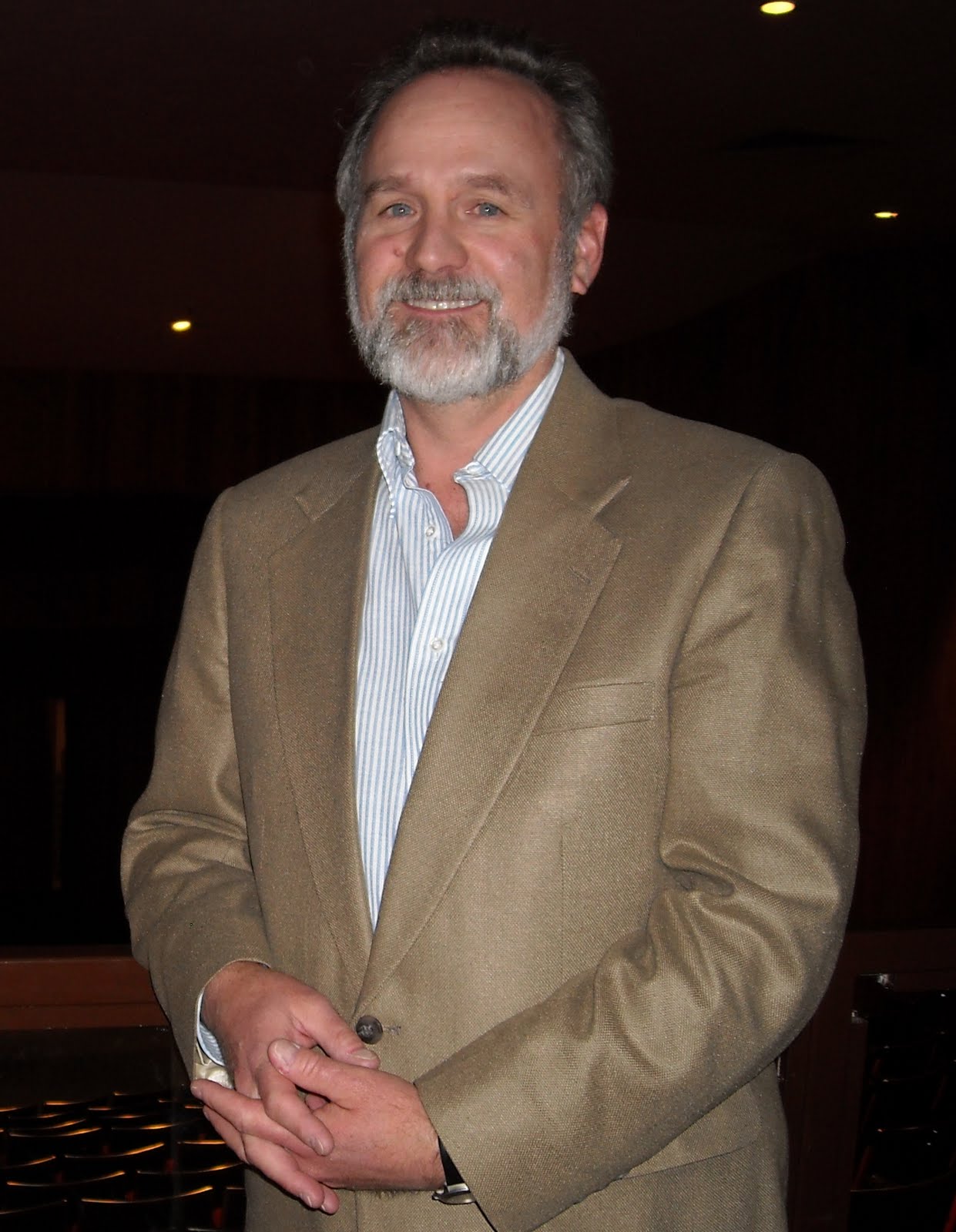
SRM Spotlight: Roger Blew, Idaho Section

By Julia Workman, SRM Outreach Intern


Ecologist Roger Blew recently acquired his pilot’s license. He also owns half an airplane, which “seems to be the expensive half,” he laughs. Other pastimes include fly fishing, spending time with his dog, Bud, and—until recently—planning the Idaho Section SRM winter meeting.
Roger says joining SRM was a logical step when he began working with Stoller Corporation in Idaho 15 years ago and began work on sagebrush steppe ecosystems—the Society was “a natural fit for where I was in my career, and what I needed in the professional world,” he says. Of course, work in rangelands meant returning to old interests.
He grew up in Kansas and did his undergraduate and graduate studies in rangelands at Emporia State and Kansas State Universities, but his post doctoral work in forest systems at the University of Washington. His work with Stoller in sagebrush steppe ecosystems, after he finished his post doc, brought him back to the interests he had had when taking range classes in Kansas and later pursuing his Ph.D. in soil ecology at the University of Calgary.
Since joining Stoller Corporation and SRM upon completion of his post doc, Roger has served as the Idaho section newsletter editor for four or five years, and recently took over the duties of Idaho Section President at the section meeting, on November 11.
Roger believes that SRM has undergone some important changes since he joined—namely, the transition of the flagship journal from the Journal of Range Management to Rangeland Ecology and Management, an ecology-based publication more similar to the journal of 15 years ago and the associated emphasis of ecologists in the Society. He also notes that new demands have been placed on ranch managers as new values have been placed on rangelands, and says that SRM has made a positive move to become more applicable to broader society by accommodating those changing values. The range profession itself has changed as well, incorporating new technology and new emphases on grazing plans and assessments, NEPA documentation, and other office-related work. Field work is still a major component of managing rangelands, but different skill sets (such as understanding statistical models and new tools such as GIS and GPS) are gaining more importance. These and other factors have forced managers to look at landscapes as a whole and highlighted the need for interagency cooperation and management for multiple uses.
When it comes down to it, Roger sees and strongly supports a movement to place greater emphasis on plant ecology in the Society. He argues that it is the basis for rangeland management: as he has heard from ranchers, “we’re not raising beef, we’re raising grass.” He also likes that rangeland management is now incorporating such ideas from plant ecology as state and transition models. To Roger, the exchange of ideas—between people and groups—is extremely important, and one of the aspects of SRM he has found most valuable in his career. This goes hand in hand with the opportunity for continuing education through SRM, important because “learning doesn’t stop when we graduate [from] college”—we need to update our knowledge as the science changes. He says he appreciates being able to learn from other SRM members’ experiences, both successes and failures.
On that note, he advises that younger SRM members can get the most out of their membership by getting involved, especially by attending—and participating in—meetings at all levels. The URME, Range Cup, and Plant ID contests, among others, are great ways of making a student’s name known to potential employers. Plus, the meetings provide opportunities to gain exposure to current issues, and gain valuable knowledge from the older generations. He comments that the way SRM includes students in the Society through its undergraduate education, involvement, and mentoring emphases is unique among the societies of which he is a member.
Roger joked at the Idaho section business meeting, that a good deal of his success in planning the meeting was due to “good people.” After reiterating this point in his interview, he added, “First rate people hire first-rate people; second-rate people hire third-rate people: hire people who are better than you!”

Tuesday, November 16, 2010

Idaho Section Meeting

By Julia Workman, SRM Outreach Intern


The Idaho SRM Section’s 2010 winter meeting on November 10-12 featured several talented speakers at various symposia focused on “Alternative Management Strategies in Big Sagebrush Steppe: Perspectives, Opportunities, and Supporting Evidence.” The section co-hosting Spokane 2012 showed the 150 visitors to Idaho Falls a great learning experience and plenty of opportunity for Idaho section members to get to know each other and guest Aleta Rudeen, the national organization’s Director for Outreach and Leadership.
The meeting kicked off with the business meeting on Wednesday night. Karen Launchbaugh, a professor at the University of Idaho, talked about the new UI Rangeland Center. This program, the only one like it in the West, currently has a membership of 23 professors, agency workers, and other individuals interested in rangelands. It will focus on applied research and forming longterm relationships, as well as solidifying the importance of rangeland ecology and management through times of shifting values at the university. Meribeth Lomkin also took the spotlight as she received the Traveling Outhouse Award for the second year running (which was handy, since the outhouse had forgotten to travel to the meeting).
The Thursday and Friday seminars kicked off with “Sagebrush steppe ecosystems—musings of a long-term student,” followed by talks ranging in topic from “Understanding resistance to invasion and resilience to disturbance” to “Fire ecology of sagebrush systems: to burn or not to burn for wildlife habitat,” from “Remote sensing applications in the sagebrush steppe of Idaho” to “Inter-relationships of invasive and native plants and hydroclimate in sagebrush steppe: implications for management.” Needless to say, everyone’s understanding of the sagebrush ecosystem improved quite a bit during our time there.
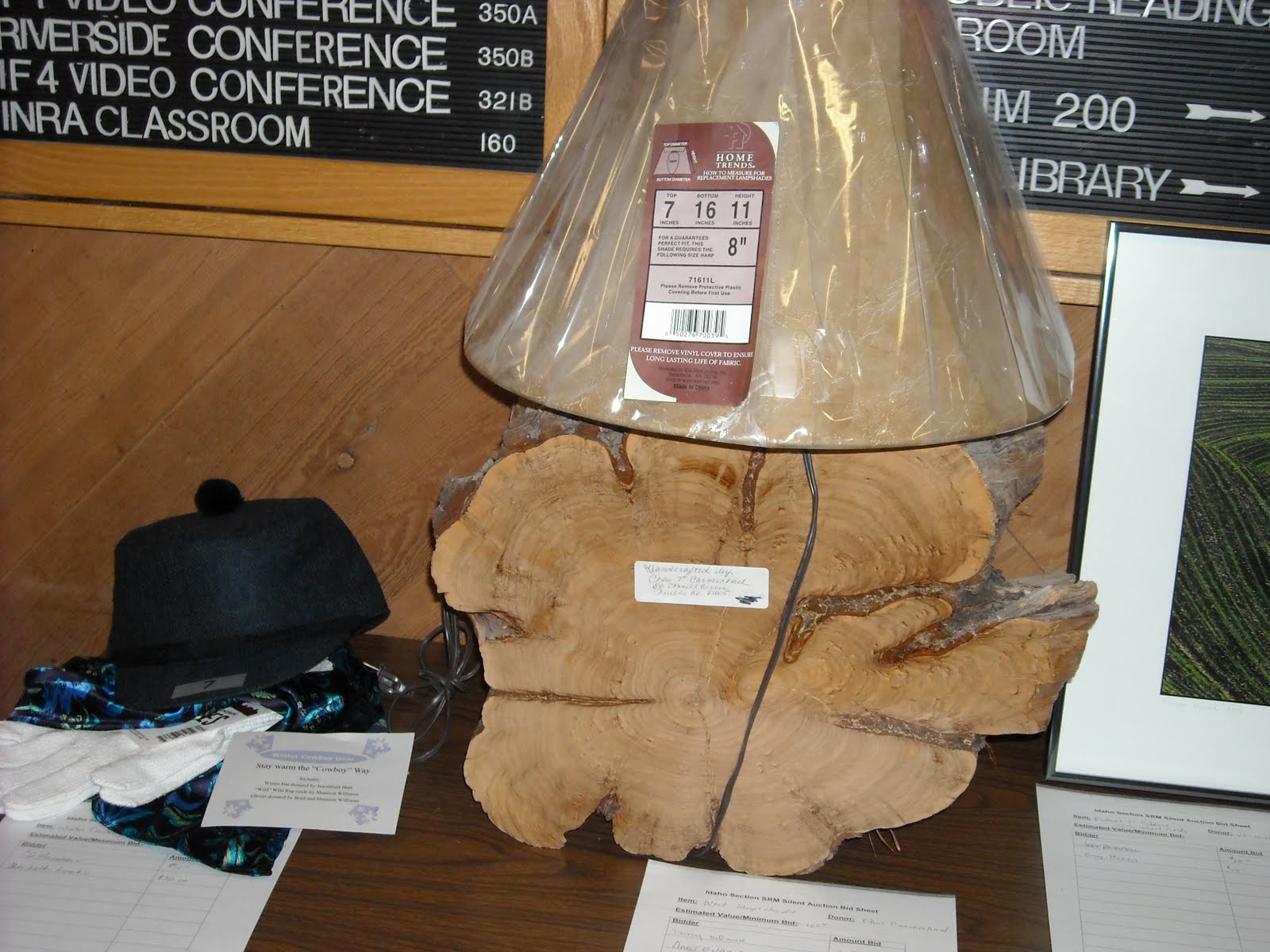
Another highlight of the meeting was the student benefit silent auction, which featured fierce bidding for such items as a license plate clock, a juniper-stand lamp, canned produce, several books, and of course a number of gift baskets. Proceeds from this annual event go to the Brian Miller Scholarship fund and donations to other student groups. Winners were declared during the Friday lunchtime poster session.
I also had the opportunity to catch up with incoming section president Roger Blew, so be sure to keep posted for the next SRM Spotlight!
Overall, thanks to Idaho for a terrific experience. The meeting was a huge success with plenty of good fun, food, and friends to offset a great atmosphere for learning. We're well on track with planning for Spokane 2012... but first, I'll see you all in Billings!


Friday, November 12, 2010

SRM Spotlight: Rex Pieper, New Mexico Section

By Julia Workman, SRM Outreach Intern

New Mexico State Professor Emeritus Rex Pieper has seen several positive changes in the Society for Range Management since joining in 1957. One of the biggest changes, he says, is the increased student involvement he sees at the university, section, and national levels. Students have always had a big role to play, and Rex says that this increase has also been important for recruiting new members and new ideas.
He should know. Rex himself joined SRM while a student at Utah State University, where he was working toward his Master’s degree in Range Management after receiving a B.S. in Wildlife Management at the University of Idaho. He later became a member of the California section while he worked toward his Ph.D. at the University of California-Berkeley, and finally joined the New Mexico section in 1963 when he accepted a position at New Mexico State University. While at his position with NMS, Rex spent his time teaching and conducting research at the Fort Stanton Experimental Range in the Sacramento Mountains. His research had a few different foci, including livestock grazing and diet work, and ecology work such as that in piƱon-juniper woodlands.
Throughout his involvement with the New Mexico SRM section, Rex has worn several different hats, serving as the section President, the Scholarship Committee Chair, a National Advisory Committee member, and finally as the section Historian, the position he currently holds. When he was not involved in SRM activities, he often spent time traveling with his family. In recent years, however, he has taken up a new pastime: “When I retired they gave me a set of golf clubs,” he laughs, “so I’ve got to break those in."
Rex notes that one of the major changes to the range profession over the years has been a demographic shift in range students, an increasing number of whom are from urban backgrounds. He adds that the same goes for their professors. “When I was starting out,” he says, “most of us had rural backgrounds.” Rex himself, raised on an irrigated South Idaho farm, is from the traditional, rural stock. Yet he does not believe the change is all bad: although a range student, professor, or professional who was raised in an urban setting may have weaker ties to the land than one raised in close proximity to it, these urban-rooted range managers can bring fresh, new insight to the field. He also notes that population in the West is booming and major population shifts are occurring, with a movement toward subdividing ranches into smaller parcels and ranchettes. This gives the range management industry a broader prospective, drawing attention to such aspects as carbon sequestration and multiuse management practices. This broad face is a direct result of many people, from different backgrounds and viewpoints, taking an interest in the management of rangelands.
The Society for Range Management will be able to adapt to these changing demographics by integrating these different perspectives into our own understanding of range management. The trick is to adapt while maintaining SRM’s ties to the land and the ideals of its founders. One aspect of this involves sharing experiences in the field, especially at the local and section levels; this sharing and the associated transfer of knowledge, particularly from older to younger members, is an important part of SRM. The fact that the Society involves scientists, technicians, land managers, ranchers, and practitioners in this sharing process makes it unique. The future, then, is bright. However, he emphasizes that it is important for all members to stay involved. “Don’t assume that someone else will take care of it. We all have a role, we all have an interest.”

Tuesday, November 9, 2010

SRM Spotlight: Chuck Quimby, Colorado Section

By Julia Workman, SRM Outreach Intern

For the busy professional, it can be difficult to maintain a high level of involvement in a society like SRM. Life member Chuck Quimby, Rangeland Program Manager for the Forest Service Rocky Mountain Region, can relate. This Colorado Section Member enjoys playing the bagpipes (although he declined to elaborate on his skill level), as well as hunting, fishing, camping, and other outdoor recreation. He received his B.S. in rangeland management with a wildlife management minor from the University of Arizona, where he also earned his Master’s degree in watershed management. He has been with the Forest Service for 39 years since graduating, not including seasonal work and a brief stint with the NRCS. Chuck says that his job keeps him busy, which means that he has been able to hold “no real offices” in SRM serving on the editorial board for Rangelands magazine. Yet he has maintained an active membership since the late sixties, when he joined as a college student. He says he joined because SRM was the professional organization for rangeland management.

Chuck decided early to become a life member because of the importance of staying involved with such an organization, and has maintained his membership in the Society for the value of his interactions with other members and access to the Society’s journals.

The Society, Chuck says, is still meeting the needs of the workforce at least as well as when he joined. He cites Rangelands and Rangeland Ecology and Management as examples of these services which also enable the Society to reach a broader and richer audience. He adds that the sections are doing a good job of staying strong and keeping people informed.

Chuck adds that SRM has done a good job of keeping its focus fairly constant, with its emphases on science and on-the-ground application, since he joined—despite some important changes. The “biggest and best” change he has seen has been the outreach to other groups with an interest in rangelands, especially professional groups and the livestock industry. He explains that livestock grazing has recently come under attack in Western culture, and hopes that SRM will be to maintain the importance of livestock grazing on the rangelands of the West. Chuck also hopes that SRM will stay relevant—the “go-to leader” for rangeland management—as it begins to deal with new aspects of rangeland management in a changing culture. “Open spaces” and zoning have not had bearing on rangeland management in the past, he points out, but will play critical roles in the future as urban areas continue to encroach on the rangeland interface. He also notes the demographic change seen all over the workforce today: an aging workforce in both the Society and agencies: “I’ve been around for 39 years, but I’m not going to stay forever,” he says.

Chuck believes SRM should work more closely with universities and agencies to produce graduates qualified to work in a variety of fields. It’s not enough anymore, he says, to graduate with a range degree: a professional needs to be able to interact with fish, wildlife, and water, as well. The presence of older, retired members in the Society is also an important resource for younger members so long as they make use of the opportunity to gain the knowledge born of years of experience.

All that said, Chuck still most highly values how the SRM enables him to interact with “a lot of different professionals in a lot of different fields” and appreciates the training, education, and knowledge exchange it has to offer, as well as being able to keep abreast of the latest science through access to SRM’s journals. He hopes SRM will be able to stay alive, active, and relevant in the coming years, and more engaged in a changing Western America and a changing world. Many groups, he says, don’t like or don’t understand what range managers and SRM do, but he hopes our importance will be made apparent to those people who care about rangelands and even to those who don’t know what rangelands really are.

Chuck has two pieces of advice for younger members. The first concerns SRM involvement: Join, he says, and go to as many functions as you can; when you’re there, interact with other members. Take initiative, because your own interest will carry you the farthest. His second is broader: There is no dumb advice. He clarifies, “You can learn from anybody, anywhere; you just have to be able to put [their advice] in perspective and make it fit your situation.”

Wednesday, October 27, 2010

SRM Spotlight: Duane McCartney, Northern Great Plains and International Mountain Sections

By Julia Workman, SRM Outreach Intern


After more than 25 years in the Society for Range Management, Duane McCartney says the best advice he ever received was from a retired scientist in Swift Current, Saskatchewan, who simply told him, “SRM is a great organization and you should join it!” Duane took these words to heart and has been deeply involved with SRM ever since.
Duane is a retired research scientist with Agriculture Canada who enjoys canoeing, cross country skiing, landscape photography, and construction. A Forage Beef Management Systems Research Scientist, he points to his early life experiences in 4-H as the first step on his path to becoming an SRM member. He later attended the University of Guelph in southern Ontario and received a degree in Animal Science before coming to Agriculture Canada. There, he researched cost-saving methods for beef and forage production in West Canada, focusing on management systems in that area. It was during the same period, in Swift Current, that Duane’s mentor, an SRM member, advised him to join the organization. Duane followed this advice and even chartered the Saskatchewan SRM section after becoming a member, at a time when the province had only a handful of SRM members.
Since then, Duane has been heavily involved both as a member of the Nominations Committee and the Awards Committee, on which he has also served as Chair. His advice for younger members who want to get the most out of their membership echoes the same principles he has followed: “The big thing is to be involved.” He recommends that students join and actively participate in their university range clubs while in college, and later in the section associated with their post-graduation location. He adds that section committees are always looking for younger member involvement, which can lead to opportunities for early career members. Further, Duane advises that involvement in field days and local tours, with the chance to interact one-on-one with older members, is a great way to learn and critical to the transfer of knowledge to the next generation.
Throughout his 25 years of involvement, Duane has seen many changes in the demographics of the Society. Membership has fluctuated some, and the younger members, such as students, have taken a larger role. He notes that now the Society has “more ladies—that’s a big one.” There is also a greater emphasis on multiuse and less on ranching now than in the past, though the ranching aspect has made a comeback in recent years. Yet, he says, the main principles are still the same; with good leadership, the Society has been able to change with the times and without altering the things most important to its membership. SRM is, as always, an excellent venue for communication among professionals and researchers, a setting for employers and prospective employees to meet, and a Society which manages to include something for everyone at the national meetings. Duane places high value on the friends from all over the world that the Society has allowed him to make, and the chances to take tours of other ecosystems—“ones I wouldn’t see in Canada.”
The SRM of twenty-five years from now, Duane hopes, will be similar to that of today—a strong organization, and an important voice for range management involving a diversity of people. He sees a big role for SRM as the focus switches from managing rangelands for livestock to managing rangelands for multiuse, and the involvement of a broad spectrum of people as it seeks to meet society’s changing needs.

Monday, October 25, 2010

Texas Section Meeting


My first ever visit to Texas was indeed, a Texas experience and a great introduction to the Texas Section of SRM.  The TSSRM fall meeting, this year held October 13-15 in Odessa, TX, is similar to a mini version of the international SRM Annual Meeting, complete with a trade show and more than 200 registrants.  While in Odessa I experienced first-hand the famed Texas hospitality...  (despite my inability to two-step).  I thoroughly enjoyed the technical sessions, banquets, and field tour.

A very large portion of the TSSRM membership is made up of NRCS employees, which is unsurprising as Texas has large amounts of private relative to public land.  Also noteworthy is that the Texas section is by far the largest section of SRM with more than 500 members.  This makes for big meetings with an interesting focus.  Additionally the meeting hosted quite a few young professionals, who had several opportunities to attend career development sessions in conjunction with the meeting, and plant ID and photo contest.

The Thursday and Friday technical sessions kicked off with a welcome from the Mayor of Odessa, and focused on a diversity of topics.  These included: effects of woody plants on water balance, effects of rangeland recovery on stream flows, mechanisms driving vegetation change, herbicides, prescribed fire to improve diversity, the challenges to range improvements, and the management of salt cedar using herbicides and biological control.  Presenters brought a wide range of experience to the technical sessions, as well as on the tour Thursday afternoon.


The tour was, as always, a meeting highlight.  On Thursday afternoon we set out in four large, air conditioned buses from the hotel heading for the local Railway Ranch.  Stan Smith, the owner of the ranch greeted us and gave an overview of the area.  Ray Schimcek gave an overview of the ranch partnerships and Dr. Dan Womochel (pictured) spoke about area geology, but not before warning the us that giving a microphone to a retired Professor of Geology could be a dangerous thing to do.

The second stop on the tour focused on vegetation, forage, and treatment of creosote and tarbush, led by Dr. Allan McGinty, Preston Irwin, and Sam Schiwart.  At the third stop of the tour Guy Bell gave an overview of the treatment of African rue, and Jim Bob Simms spoke to us about pipeline safety.  Mark Moseley gave a talk titled Forage Estimation and Grazing Stick Demonstration, after which, he distributed grazing sticks to the group.  (I was disappointed, but fairly unsurprised to have my grazing stick confiscated in airport security the following day).

One of my favorite talks from the tour was titled Feng Shui for Wildlife, during which Dr. Dale Rollins shook things up with regards to vegetation management for wildlife.  Somehow, he managed to put nearly everything in terms of baseball and gave a creative, interesting talk.

All in all, the TSSRM meeting was a successful and interesting event  The banquet was fun and entertaining, I am pretty sure the auction made a killing off both its willing and unwilling bidders (and with some top notch items for sale), and people all seemed to know one another well, despite being the largest section of the Society.

Thank you to the Texas Section of SRM for their hospitality and the introduction to Texas!  Next year I'll do my best to bring some boots.

Thursday, October 21, 2010

SRM Spotlight: Lynne Breese, Pacific Northwest Section

By Julia Workman, SRM Outreach Intern


Lynn (with Bonnie and Kippy) monitoring a prescribed range burn


For ranchers Lynne Breese and her husband John of Prineville, Oregon, membership in the Society for Range Management is about being part of a big family. “It’s like going to a family reunion,” she says of attending SRM functions. Members “don’t always agree, but we can learn from each other and we’ve become such good friends, we can work out problems together.” Since joining the organization in the early 90s, Lynne has certainly been involved in that family.

Lynne was raised in an agricultural setting, with a father who worked as a researcher at the Oregon State University Agricultural Experiment Station in Ontario. She also participated in 4-H, an experience which would later lead her to a home economics degree and a career as an extension agent with Oregon State University.

Lynne joined SRM in the early 1990s, about the time she took a role in the full-time management of the ranch. She says that then as now, it was important to both her and her husband (who had joined a few years before) that SRM provided them a medium for meeting people with a variety of experiences on rangelands, and allowed them the opportunity to learn more about the things they wanted to do with the ranch.
John and Lynne’s ranch has been in the family for well over a century, since John’s great-grandfather homesteaded it in the late 1880s. She notes that in photos of the original homestead, there is a conspicuous lack of invasive junipers. Juniper control is thus an important part of the couple’s management. She relates how she and John often host student groups who come to “learn on the land,” by working on the ranch: “they help cut little junipers to eat,” she explains with a chuckle, noting that all parties seem to benefit from the exchange. The different activities these students engage in during their time on the ranch are important learning events for all participants, and Lynne believes such events to be one of the best ways for young members to learn from older ones. Especially in light of current workforce trends away from agricultural backgrounds, Lynne emphasizes that students need to “get out and get their hands and feet dirty” in order to learn. They need to work with those who live and work on the land in order to gain a practical knowledge of the field. “You don’t do that by sitting at a computer,” she adds, also noting that agencies and retirees are great resources to tap for gaining this sort of experience.

However, hosting student groups is just one example of the Breeses’ participation in SRM. Lynne has served as director of the Pacific Northwest Section and is currently a co-editor for the Pacific Northwest Section newsletter. John and Lynne also frequent various SRM events, from conventions to workshops. Lynne remarks that participation is crucial to the continued success of the organization, along with members’ willingness to talk and listen to each other. “Don’t be afraid to ask questions,” she cites as the best advice she has ever received, “but do be willing to listen.”

Lynne’s vision for SRM involves an organization that “continues to do what we do.” She notes that the need for practical range management skills is not going to go away; if anything, it will only become greater. Society for Range Management members should thus be prepared to reach out to potential new members through agencies and personal invitations, with an ability to explain SRM’s relevance to all stakeholders—both those who manage the land and those who benefit from its successful management.

Monday, October 18, 2010

California Pacific and Pacific Northwest Joint Section Meeting


The CalPac and PNW sections of SRM hosted a phenomenal joint section meeting early October at Lava Beds National Monument near Tulelake, California.  We learned about area rangelands, fire ecology, and the geologic and anthropogenic history at the monument.  Presentations focused on pre- and post- European settlement ecological conditions, fire management in the national monument and fire history of the area, and on wildlife species, wildlife preserves, and biodiversity.


A personal highlight from the meeting included several spelunking expeditions in the lava tubes.  It took a sense of adventure to climb through the caves, one flashlight to every four or five people!

Another meeting highlight was a detailed narrative of the Modoc War during the winter of 1872 and 1873 at the monument.  Our guide, who was himself a Modoc descendant, took us on tour through the site of the Modoc War, giving a vivid account of the battles, its key players, and how it all fit into the striking Lava Beds landscape.

Also at the meeting, I had the opportunity to meeting with the Spokane 2012 Annual Meeting planning committee.  These folks are well on their way towards putting together a meeting that will blow your socks off.  That is, if you even have socks by the end of the Billings Annual Meeting this February 6-10, 2011 in Montana.  Don't forget to register ASAP to qualify for early registration rates.

In an nutshell, the CalPac/PNW joint fall meetings was one more example of SRM sections putting on a great meeting: good food, good people, good conversation all around.  Thanks to both sections for the hospitality!


(Well, mostly good people - these two are clearly up to some trouble!)

Thursday, September 23, 2010

Introducing the new SRM Outreach Intern - Julia Workman


The Society for Range Management is pleased to introduce Julia Workman as the Outreach Intern for the Fall 2010 semester.  Julia is a sophomore at the University of Idaho, pursuing a Bachelor of Science degree in Rangeland Ecology and Management with a minor in Public Administration and Policy.  Julia will be conducting a short series of long-term SRM member interviews to post on the SRM Outreach blog as well as other outreach-related tasks as part of her Internship Program.

Julia is the President of the University of Idaho Range Club, where she has also served as Treasurer and a member of last year’s URME and Student Chapter Display teams.  On campus, she is involved with the Student Grant Program Committee and Honors Program.  When not directly engaged in any of the above activities, she enjoys country swing dancing, spending time with family and friends, baking, and working on the family farm/ranch in Grangeville, Idaho.  After receiving her B.S., Julia plans to attend law school before starting a career in natural resources- (especially water-) related law.

Welcome Julia!